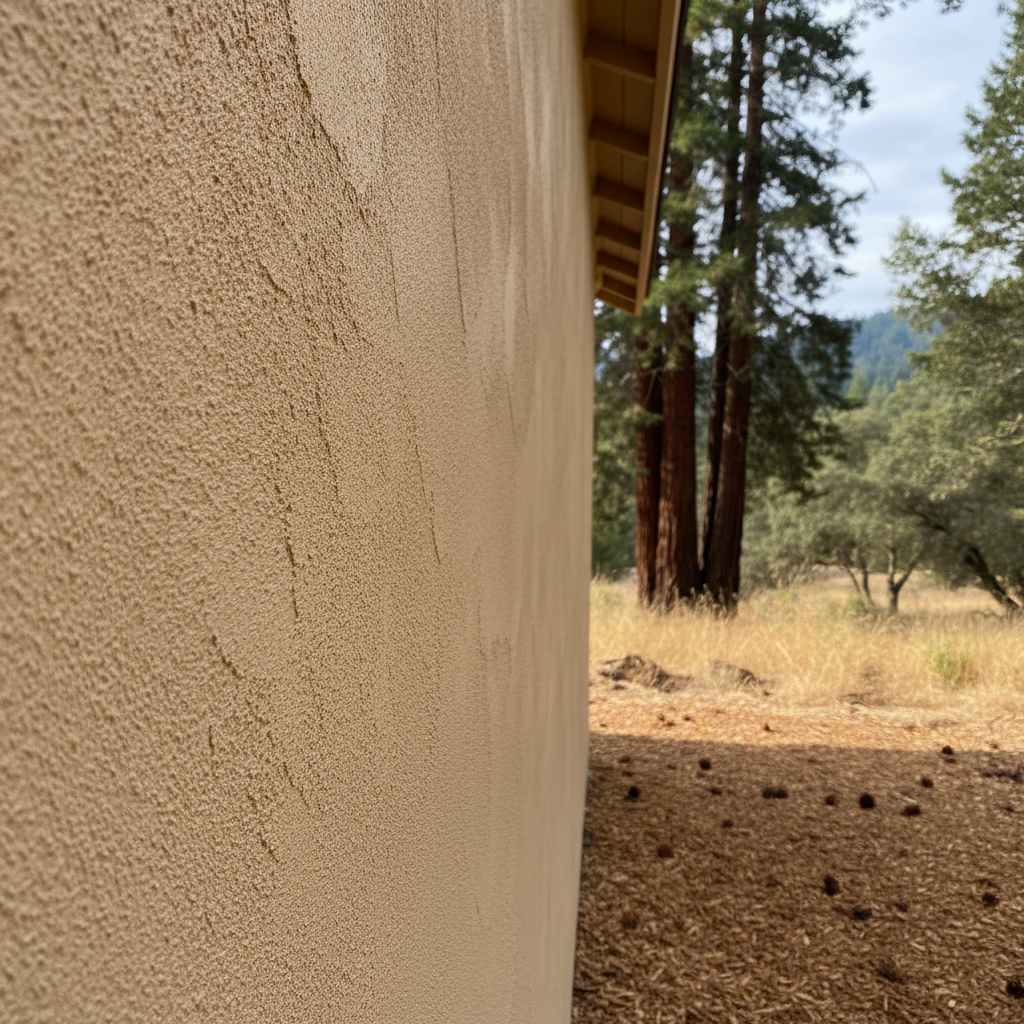
When heavy rain rolls through the San Lorenzo Valley and tests your home exterior, you might wonder what is happening underneath your stucco finish. If you live in Felton, you already know how damp the local microclimate gets, especially with the heavy canopy of redwoods trapping moisture close to the ground. Stucco is tough, but stucco is not invincible. Pacific Stucco answers the questions homeowners ask most often about getting a stucco inspection.
How do I know if I actually need a stucco inspection?
You do not always need to call someone out the second you spot a tiny hair-thin crack, but certain signs mean it is time to take a closer look. If you are seeing white, powdery residue (efflorescence) pushing through the finish, dark water streaks running down from window corners, or sections that sound hollow when you tap them, you should not wait. Pacific Stucco also recommends a Stucco Inspection if you are buying or selling a home, or if your place has not been checked in over a decade. Pacific Stucco sees plenty of homes where minor surface neglect turned into trapped wall moisture simply because the issue went unnoticed for too long.
What does an inspector actually look for?
A real Stucco Inspection goes far beyond just looking at the outer color. Pacific Stucco checks the flashing around windows and doors, looks for gaps where caulking has shrunk, and examines the weep screeds near the foundation to make sure water can actually escape. We are hunting for cracks that allow water intrusion, bulging areas that indicate delamination, and signs that the lath behind the scratch coat is rusting out. A Stucco Inspection is a systematic check of your home entire protective skin.
Do you have to drill holes in my walls?
Not always, but it depends on what we find during the initial visual walkthrough. A standard Stucco Inspection does not require any destructive testing. However, if we spot warning signs like widespread staining or suspect that moisture has bypassed the weather-resistive barrier, we might recommend invasive testing using a pin moisture meter. That means drilling tiny, easily patchable holes to check the moisture content of the wood framing or OSB sheathing underneath. We always discuss this with you first before taking that step.
How long does a typical inspection take?
Most residential inspections on a standard single-family home take anywhere from one to three hours. The exact time depends entirely on the size of the house, how complex the architectural details are, and whether we need to perform moisture testing. Older homes tucked away in the Santa Cruz Mountains often have tricky additions or multi-story layouts that take a bit longer to evaluate properly.
Can I just do the inspection myself?
You can certainly spot-check your walls for obvious cracks or peeling paint, but catching deep trouble requires knowing how stucco assemblies actually work. Most homeowners miss the subtle signs—like improper clearance between the dirt and the weep screed, or small negative slopes on window sills that pool water. Getting a professional set of eyes on it usually saves you from misdiagnosing a simple cosmetic blemish as a major failure, or worse, ignoring a hidden leak.
What happens after the inspection is done?
You should expect a detailed written breakdown outlining every elevation of your home, complete with photo evidence of any trouble spots. Pacific Stucco makes sure our reports clearly separate minor cosmetic flaws from urgent structural or moisture risks. For homes and businesses in Felton, Pacific Stucco provides Stucco Inspection services that give you a clear roadmap of what needs immediate attention, what can wait, and how to protect your property without paying for unnecessary repairs.