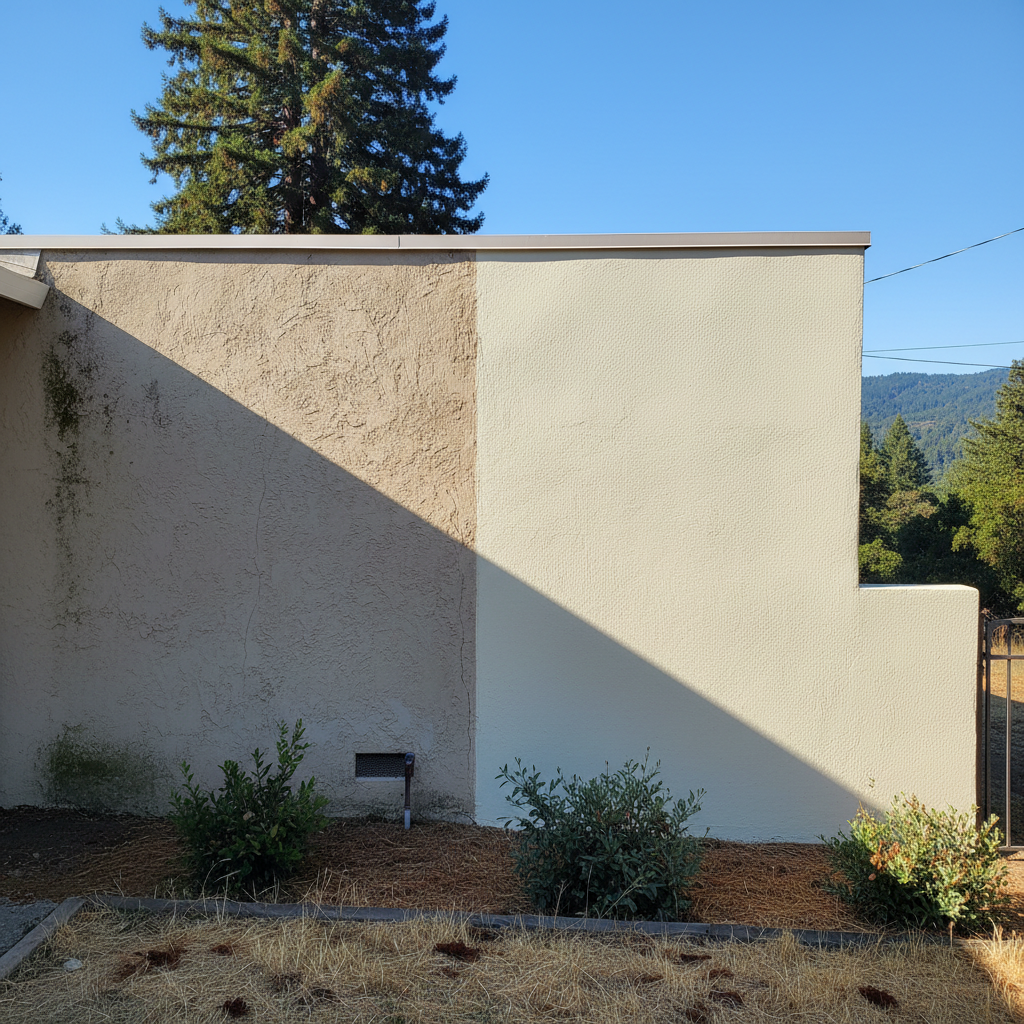
Property owners in the Santa Cruz Mountains often try to figure out which stucco system makes sense for their property here in Felton, CA. Homes up around Highway 9 or tucked into the redwoods near Paradise Park have exterior walls that take heavy winter rains, morning fog, and moisture trapped by the surrounding canopy. Choosing the wrong finish can lead to cracking, staining, and expensive repairs. Pacific Stucco looks at how traditional three-coat stucco stacks up against acrylic finishes so homeowners can make the right call for their house.
Traditional Three-Coat Stucco: The Mountain Standard
Traditional stucco has been used for many years for a reason. It uses a scratch coat, a brown coat, and a finish coat, all reinforced with metal lath over a moisture barrier. Pacific Stucco installs plenty of Traditional Three-Coat Stucco systems because they offer great impact resistance and fire safety. If a fallen redwood branch bumps your house, traditional hard-coat stucco usually handles the impact better than other finishes.
However, traditional stucco is heavy, takes longer to cure, and it will crack. Movement is a fact of life in our shifting hillside soils, and traditional cement does not bend much. Traditional Three-Coat Stucco also absorbs moisture like a sponge during torrential atmospheric rivers, which means homeowners definitely need a breathable paint or sealer on top to keep mildew at bay.
Acrylic Stucco: Flexibility and Color Retention
Acrylic Stucco or synthetic stucco trades that heavy cement top coat for a flexible, resin-based finish coat, often applied over a base coat with fiberglass mesh. The biggest advantage of Acrylic Stucco is flexibility. Because local ground can shift after heavy rains, acrylic stretches slightly to bridge hairline cracks before they ever show up on the surface.
Homeowners also get superior color consistency. Traditional stucco is dyed in the batch or painted later, while acrylic finishes are mixed to exact color specifications and resist fading from UV rays much longer. Maintenance is lower upfront, though the initial material cost for Acrylic Stucco is higher.
Cost and Maintenance Realities
When you look at the numbers, traditional three-coat is usually cheaper on the front end for materials, but labor-intensive. Acrylic Stucco costs more upfront because the synthetic polymers and specialized primers are not cheap. Over 10 years or more, though, you might spend less on patching cracks with an acrylic system, provided it was installed correctly over a solid substrate.
Cleaning is another story. The damp environment under the Felton redwoods loves to grow green algae on north-facing walls. Acrylic finishes can be pressure-washed carefully, but workers have to be careful not to blast off the texture. Traditional stucco handles washing well, but it stains easier if dirt gets into the porous surface.
Making the Final Choice for Your Property
If you have an older Craftsman or a sprawling ranch-style home nestled deep in a shady, damp lot, the flexibility and moisture resistance of Acrylic Stucco often win out. If you live out on a more exposed ridge where fire safety and rock-solid impact resistance top your priority list, traditional three-coat remains hard to beat.
Homeowners should think about their microclimate, their budget, and how much maintenance they want to deal with down the road. Getting the base layer and waterproofing right matters much more than the finish coat anyway, so Pacific Stucco makes sure every job understands mountain building conditions in Felton, CA.